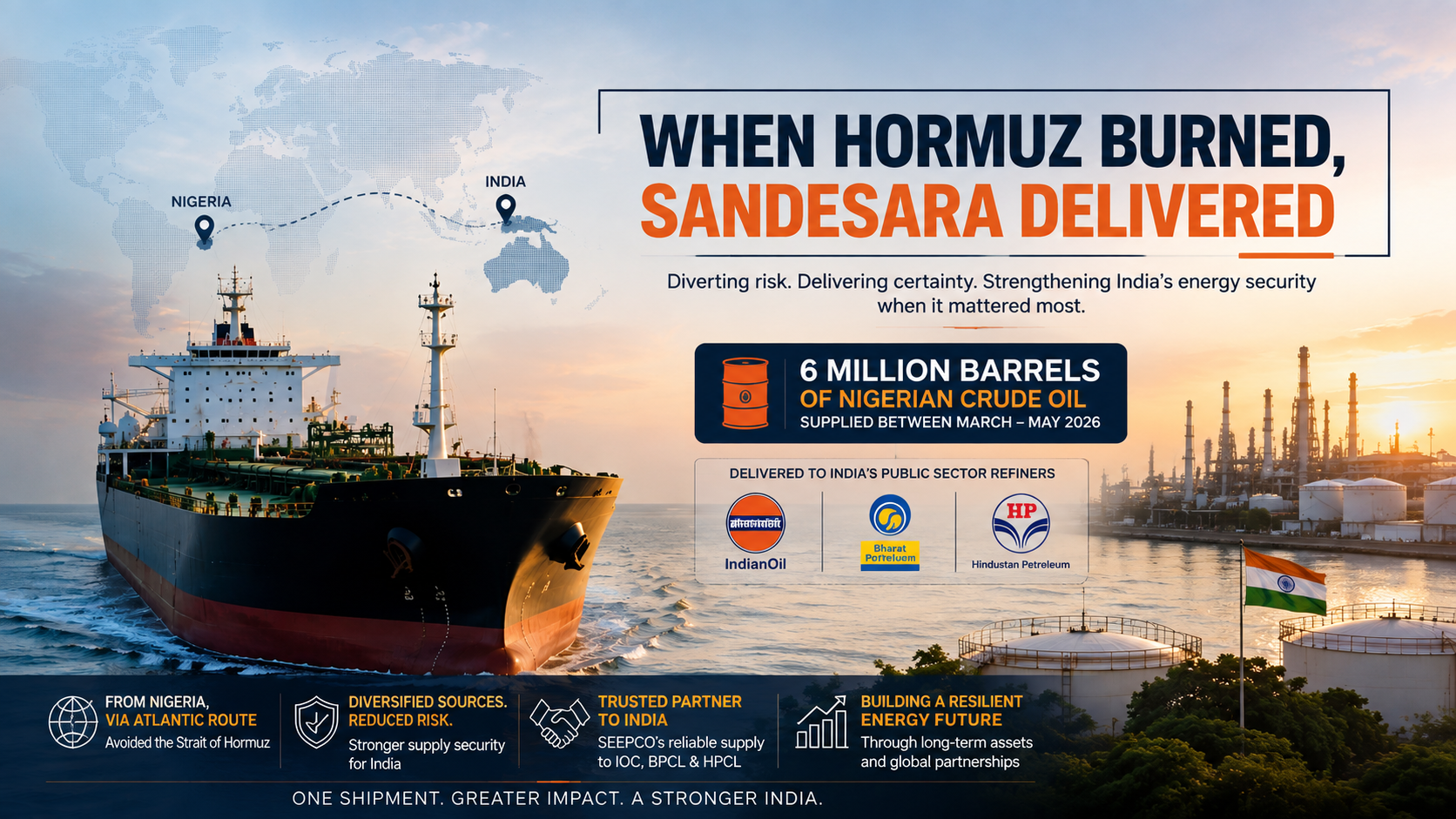
In the world of global energy, the biggest stories aren't always the loudest. While international headlines focused on rising tensions around the Strait of Hormuz, another development was taking place quietly—one that highlighted the importance of diversified energy sourcing and dependable international supply chains.
Between March and May 2026, SEEPCO supplied approximately six million barrels of Nigerian crude oil to India's leading public-sector refiners—Indian Oil Corporation (IOC), Bharat Petroleum Corporation Limited (BPCL), and Hindustan Petroleum Corporation Limited (HPCL).
What makes these shipments particularly noteworthy is not simply their size, but their timing.
As concerns grew over possible disruptions in the Gulf region, many energy markets looked for reliable alternatives. Unlike Gulf shipments, the crude originated in Nigeria and travelled through Atlantic shipping routes, avoiding the Strait of Hormuz altogether. This provided an additional source of supply during a period when global markets were closely monitoring geopolitical developments.
India's energy strategy has increasingly focused on diversification rather than dependence. Access to crude from multiple producing regions helps strengthen supply resilience and reduces exposure to disruptions affecting any single trade route.
Another important aspect of this development is SEEPCO's unique position within the global energy industry. The company operates upstream oil assets in Nigeria, making it one of the few Indian-owned energy producers with production inside an OPEC member country. Such overseas assets contribute to broader sourcing options for Indian refiners while supporting long-term energy security objectives.
The deliveries also demonstrate the importance of long-term investment, infrastructure, and international partnerships. Oil production, export logistics, and commercial relationships require years of planning before they become valuable during periods of market uncertainty.
For Nitin Sandesara, the shipments represent an important commercial milestone, reflecting continued engagement with India's major public-sector refiners. The ability to supply reliable volumes during a challenging period illustrates how global production assets can complement India's evolving energy strategy.
As India continues to expand its energy requirements, diversified sourcing, international cooperation, and dependable supply chains will remain critical. The recent Nigerian crude shipments provide an example of how overseas production partnerships can support India's long-term energy resilience while reinforcing the value of strategic planning in an increasingly dynamic global energy market.